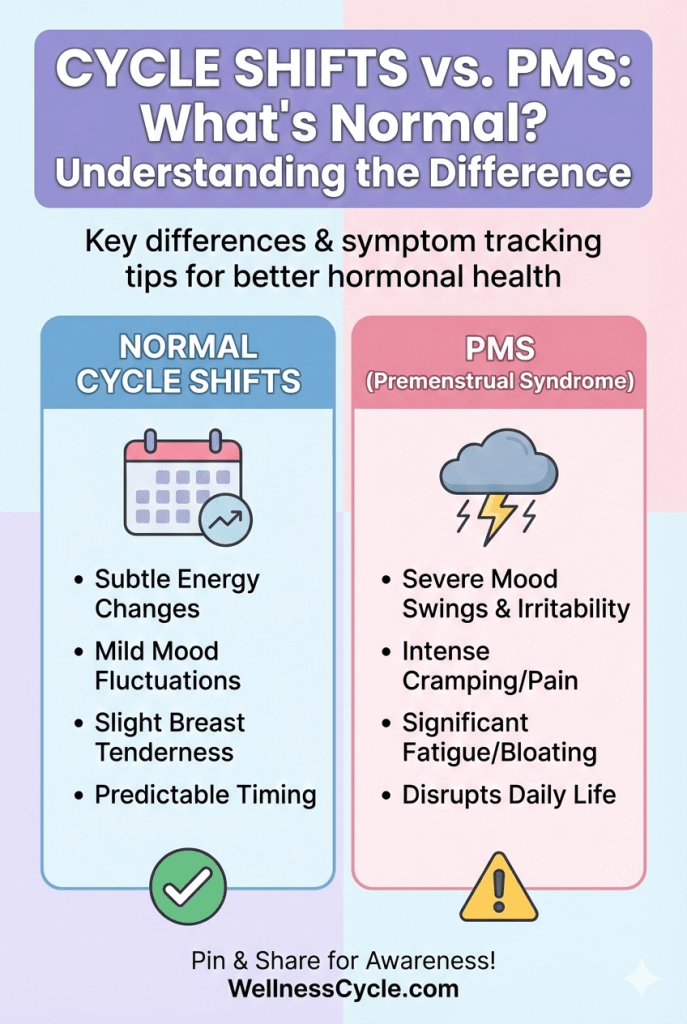
For anyone with a menstrual cycle, the days leading up to a period can feel like a bit of a mystery. One month you might feel slightly tired, and the next, you’re crying over a commercial or dealing with intense cravings.
Because our hormones, specifically estrogen and progesterone, fluctuate throughout the month, it is perfectly normal to feel “different” during your luteal phase (the time between ovulation and your period). But when do these changes cross the line into Premenstrual Syndrome (PMS)?
Let’s break down the distinction between healthy cycle shifts and clinical PMS.
The Normal Luteal Phase: What to Expect
In a healthy cycle, progesterone rises after ovulation. Progesterone is often called the “chilling” hormone because it has a calming effect on the brain. However, as it peaks and then begins to drop right before your period, your body undergoes physiological changes.
Normal symptoms often include:
Mild Breast Tenderness: A slight heaviness or sensitivity.
Subtle Energy Shifts: Feeling a little more tired than usual or preferring a quiet night in over a loud party.
Mild Bloating: Slight water retention that doesn’t interfere with your ability to wear your normal clothes.
Appetite Changes: A slight increase in hunger (your body actually burns more calories during this phase!).
The “Awareness”: You feel that your period is coming, but it doesn’t stop you from living your life.
When It Becomes PMS
PMS is defined by a cluster of physical and emotional symptoms that occur consistently in the second half of the cycle and, most importantly, interfere with some aspect of your life. If you find yourself missing work, snapping at loved ones, or feeling unable to function normally, it likely falls under the PMS umbrella.
The “Red Flag” Zone: PMDD
If your symptoms are extreme, specifically involving feelings of hopelessness, intense anger, or severe depression, you may be experiencing Premenstrual Dysphoric Disorder (PMDD). This is a severe, sometimes disabling extension of PMS and requires clinical support.
How to Track and Tell
Because “normal” is subjective, the best way to know what’s happening in your body is to track it for three consecutive months.
Use a Journal or App: Note your mood, energy, and physical symptoms daily.
Look for the “Window”: Do symptoms disappear within 1–2 days of your period starting? (This is a hallmark of PMS).
Rate the Impact: On a scale of 1–10, how much did your symptoms disrupt your day? If you’re consistently hitting 7 or above, it’s worth a conversation with your doctor.

Summary
Feeling different in the days leading up to your period is a sign that your hormones are working. However, suffering is not a requirement of being a woman. If your cycle feels like a monthly crisis rather than a manageable shift, your hormones might just need a little extra support through lifestyle changes or medical guidance.
Note: If you are experiencing severe emotional distress, please reach out to a healthcare provider or a mental health professional immediately.
 Her Wellness notes